How Manufacturers Are Moving Beyond Excel With AI-Driven Supply Chain Risk Management
For many manufacturers, the biggest challenge in supply chain management is not a lack of data. The problem is that most of the data being used is already outdated by the time decisions are made.
Across manufacturing and procurement teams, planners still rely heavily on spreadsheets, disconnected ERP systems, and manual reporting processes. Forecasts are often created after hours of reconciliation work, while disruptions are addressed only after they begin impacting operations.
As supply chains become more global and volatile, this reactive approach creates significant risk. Delays at ports, raw material price fluctuations, geopolitical events, and changing customer demand can all affect production schedules and margins.
This is where platforms like Vocom AI are changing the process.
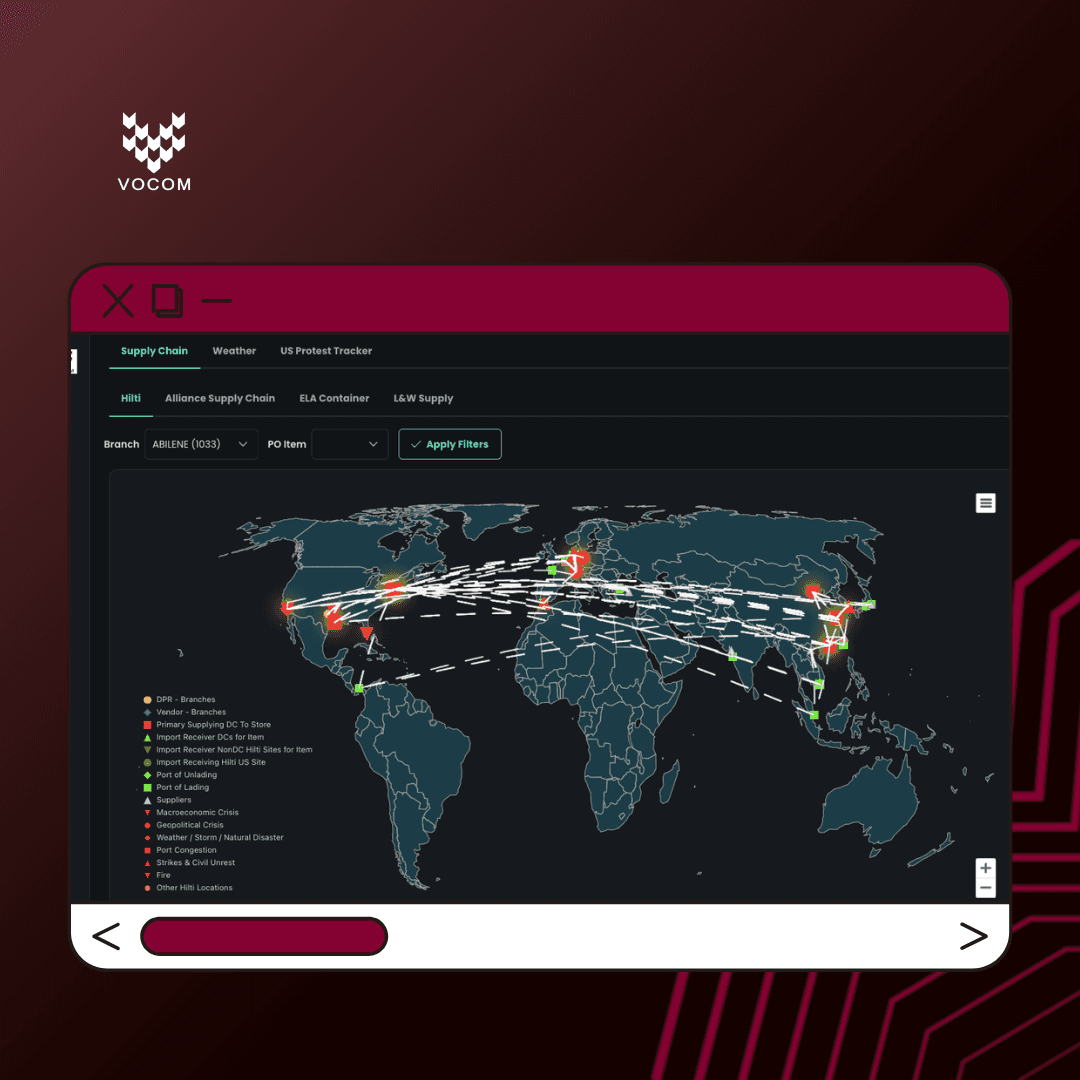
By overlaying internal ERP data with more than 25,000 global indicators and over 10 billion external data points, manufacturers are able to move from historical reporting toward forward-looking decision support.
For many manufacturers, the biggest challenge in supply chain management is not a lack of data. The problem is that most of the data being used is already outdated by the time decisions are made.
Across manufacturing and procurement teams, planners still rely heavily on spreadsheets, disconnected ERP systems, and manual reporting processes. Forecasts are often created after hours of reconciliation work, while disruptions are addressed only after they begin impacting operations.
As supply chains become more global and volatile, this reactive approach creates significant risk. Delays at ports, raw material price fluctuations, geopolitical events, and changing customer demand can all affect production schedules and margins.
This is where platforms like Vocom AI are changing the process.
By overlaying internal ERP data with more than 25,000 global indicators and over 10 billion external data points, manufacturers are able to move from historical reporting toward forward-looking decision support.
For many manufacturers, the biggest challenge in supply chain management is not a lack of data. The problem is that most of the data being used is already outdated by the time decisions are made.
Across manufacturing and procurement teams, planners still rely heavily on spreadsheets, disconnected ERP systems, and manual reporting processes. Forecasts are often created after hours of reconciliation work, while disruptions are addressed only after they begin impacting operations.
As supply chains become more global and volatile, this reactive approach creates significant risk. Delays at ports, raw material price fluctuations, geopolitical events, and changing customer demand can all affect production schedules and margins.
This is where platforms like Vocom AI are changing the process.
By overlaying internal ERP data with more than 25,000 global indicators and over 10 billion external data points, manufacturers are able to move from historical reporting toward forward-looking decision support.
Turning Historical ERP Data Into Forward-Looking Insight
One of the key differences between traditional business intelligence tools and AI-driven supply chain systems is the ability to combine internal operational data with external signals.
Instead of simply visualizing what already happened, Vocom AI continuously analyzes the external factors that influence supply chain performance and demand.
This includes:
Global economic indicators
Consumer behavior trends
Exchange rates
Raw material pricing
Weather events
Logistics disruptions
Port congestion
Geopolitical developments
By combining these signals with ERP and purchasing data, manufacturers gain a more complete understanding of what may happen next instead of reacting after the fact.
For supply chain teams managing hundreds or thousands of SKUs, this becomes especially important. Manual planning processes often cannot scale effectively when demand patterns shift quickly.
One of the key differences between traditional business intelligence tools and AI-driven supply chain systems is the ability to combine internal operational data with external signals.
Instead of simply visualizing what already happened, Vocom AI continuously analyzes the external factors that influence supply chain performance and demand.
This includes:
Global economic indicators
Consumer behavior trends
Exchange rates
Raw material pricing
Weather events
Logistics disruptions
Port congestion
Geopolitical developments
By combining these signals with ERP and purchasing data, manufacturers gain a more complete understanding of what may happen next instead of reacting after the fact.
For supply chain teams managing hundreds or thousands of SKUs, this becomes especially important. Manual planning processes often cannot scale effectively when demand patterns shift quickly.
One of the key differences between traditional business intelligence tools and AI-driven supply chain systems is the ability to combine internal operational data with external signals.
Instead of simply visualizing what already happened, Vocom AI continuously analyzes the external factors that influence supply chain performance and demand.
This includes:
Global economic indicators
Consumer behavior trends
Exchange rates
Raw material pricing
Weather events
Logistics disruptions
Port congestion
Geopolitical developments
By combining these signals with ERP and purchasing data, manufacturers gain a more complete understanding of what may happen next instead of reacting after the fact.
For supply chain teams managing hundreds or thousands of SKUs, this becomes especially important. Manual planning processes often cannot scale effectively when demand patterns shift quickly.
Replacing Manual Forecasting Processes
In one example demonstrated within the Vocom AI platform, a tier one automotive and electronics manufacturer was manually forecasting 852 SKUs using Excel.
The process was time-consuming, difficult to maintain, and vulnerable to forecasting errors.
To improve planning accuracy, the company automated its weekly forecasting workflow through Vocom AI.
Every Monday morning, the system automatically pulls historical sales and ERP data before overlaying external market indicators. Instead of manually reviewing spreadsheets, planners receive updated forecasts, anomaly alerts, and demand driver analytics in real time.
The platform is also able to identify the specific factors influencing demand changes.
For automotive manufacturers, this can include variables such as:
Global vehicle sales
Exchange rate fluctuations
Economic policy changes
Consumer demand shifts
Raw material market conditions
Rather than simply generating a forecast number, the platform explains why demand is changing.
This allows supply chain teams to move away from repetitive spreadsheet work and focus on strategic planning and decision-making.
In one example demonstrated within the Vocom AI platform, a tier one automotive and electronics manufacturer was manually forecasting 852 SKUs using Excel.
The process was time-consuming, difficult to maintain, and vulnerable to forecasting errors.
To improve planning accuracy, the company automated its weekly forecasting workflow through Vocom AI.
Every Monday morning, the system automatically pulls historical sales and ERP data before overlaying external market indicators. Instead of manually reviewing spreadsheets, planners receive updated forecasts, anomaly alerts, and demand driver analytics in real time.
The platform is also able to identify the specific factors influencing demand changes.
For automotive manufacturers, this can include variables such as:
Global vehicle sales
Exchange rate fluctuations
Economic policy changes
Consumer demand shifts
Raw material market conditions
Rather than simply generating a forecast number, the platform explains why demand is changing.
This allows supply chain teams to move away from repetitive spreadsheet work and focus on strategic planning and decision-making.
In one example demonstrated within the Vocom AI platform, a tier one automotive and electronics manufacturer was manually forecasting 852 SKUs using Excel.
The process was time-consuming, difficult to maintain, and vulnerable to forecasting errors.
To improve planning accuracy, the company automated its weekly forecasting workflow through Vocom AI.
Every Monday morning, the system automatically pulls historical sales and ERP data before overlaying external market indicators. Instead of manually reviewing spreadsheets, planners receive updated forecasts, anomaly alerts, and demand driver analytics in real time.
The platform is also able to identify the specific factors influencing demand changes.
For automotive manufacturers, this can include variables such as:
Global vehicle sales
Exchange rate fluctuations
Economic policy changes
Consumer demand shifts
Raw material market conditions
Rather than simply generating a forecast number, the platform explains why demand is changing.
This allows supply chain teams to move away from repetitive spreadsheet work and focus on strategic planning and decision-making.
Moving Beyond Static Dashboards
Traditional dashboards provide visibility. Modern supply chain systems need to provide decision support.
As manufacturing environments become more complex, supply chain teams need tools that not only centralize data but also help explain relationships, detect anomalies, and model future scenarios.
This is where AI-driven planning platforms are beginning to replace spreadsheet-heavy workflows.
The goal is not simply automation.
It is enabling faster, more confident operational decisions across procurement, logistics, manufacturing, and planning teams.
For manufacturers operating globally, the ability to understand how risk propagates throughout the supply chain is becoming increasingly important.
The companies that adapt fastest will not necessarily be the ones with the most data.
They will be the ones that can turn data into action before disruptions happen.
Traditional dashboards provide visibility. Modern supply chain systems need to provide decision support.
As manufacturing environments become more complex, supply chain teams need tools that not only centralize data but also help explain relationships, detect anomalies, and model future scenarios.
This is where AI-driven planning platforms are beginning to replace spreadsheet-heavy workflows.
The goal is not simply automation.
It is enabling faster, more confident operational decisions across procurement, logistics, manufacturing, and planning teams.
For manufacturers operating globally, the ability to understand how risk propagates throughout the supply chain is becoming increasingly important.
The companies that adapt fastest will not necessarily be the ones with the most data.
They will be the ones that can turn data into action before disruptions happen.
Traditional dashboards provide visibility. Modern supply chain systems need to provide decision support.
As manufacturing environments become more complex, supply chain teams need tools that not only centralize data but also help explain relationships, detect anomalies, and model future scenarios.
This is where AI-driven planning platforms are beginning to replace spreadsheet-heavy workflows.
The goal is not simply automation.
It is enabling faster, more confident operational decisions across procurement, logistics, manufacturing, and planning teams.
For manufacturers operating globally, the ability to understand how risk propagates throughout the supply chain is becoming increasingly important.
The companies that adapt fastest will not necessarily be the ones with the most data.
They will be the ones that can turn data into action before disruptions happen.