Physical AI Is Moving Into Supply Chains. Governance Hasn’t Caught Up.
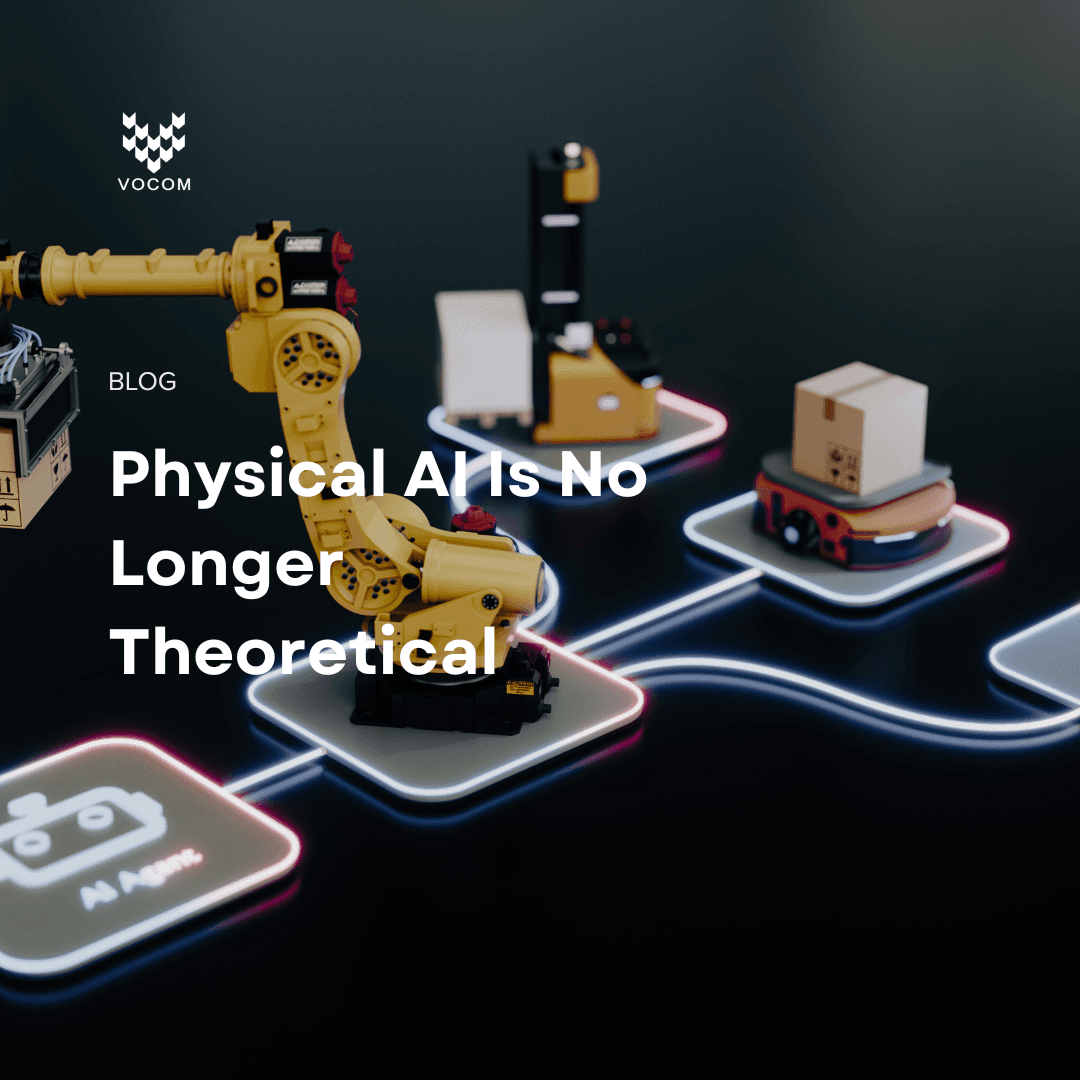
Artificial intelligence is no longer confined to dashboards and reports. It is moving into physical environments where decisions influence real-world operations across manufacturing, logistics, and supply chains.
This shift is often described as “Physical AI.” It includes systems that combine data, models, and real-time inputs to influence how goods are produced, moved, and delivered. As these systems expand, the conversation is changing. The focus is no longer just on whether AI can generate insights, but on how those insights translate into actions that affect operations at scale.
For supply chain teams, this introduces a new level of responsibility. Decisions are no longer delayed or reviewed in isolation. They are increasingly continuous, interconnected, and operational.
Artificial intelligence is no longer confined to dashboards and reports. It is moving into physical environments where decisions influence real-world operations across manufacturing, logistics, and supply chains.
This shift is often described as “Physical AI.” It includes systems that combine data, models, and real-time inputs to influence how goods are produced, moved, and delivered. As these systems expand, the conversation is changing. The focus is no longer just on whether AI can generate insights, but on how those insights translate into actions that affect operations at scale.
For supply chain teams, this introduces a new level of responsibility. Decisions are no longer delayed or reviewed in isolation. They are increasingly continuous, interconnected, and operational.
Artificial intelligence is no longer confined to dashboards and reports. It is moving into physical environments where decisions influence real-world operations across manufacturing, logistics, and supply chains.
This shift is often described as “Physical AI.” It includes systems that combine data, models, and real-time inputs to influence how goods are produced, moved, and delivered. As these systems expand, the conversation is changing. The focus is no longer just on whether AI can generate insights, but on how those insights translate into actions that affect operations at scale.
For supply chain teams, this introduces a new level of responsibility. Decisions are no longer delayed or reviewed in isolation. They are increasingly continuous, interconnected, and operational.
When AI Moves From Insight to Action
The challenge with Physical AI is not accuracy alone. It is what happens after the model produces an output.
In traditional environments, a forecast sits in a dashboard. A planner reviews it, adjusts it, and decides what to do next. In more advanced systems, that same forecast can directly influence procurement decisions, production schedules, or logistics planning.
This creates a different kind of risk. A model output is no longer just information. It becomes an input into real-world actions.
If demand is overestimated, inventory builds up. If it is underestimated, supply gaps appear. When decisions are made faster and at scale, even small inaccuracies can have amplified consequences.
The question is no longer “Is the model right?” It becomes “What happens when the model acts?”
The challenge with Physical AI is not accuracy alone. It is what happens after the model produces an output.
In traditional environments, a forecast sits in a dashboard. A planner reviews it, adjusts it, and decides what to do next. In more advanced systems, that same forecast can directly influence procurement decisions, production schedules, or logistics planning.
This creates a different kind of risk. A model output is no longer just information. It becomes an input into real-world actions.
If demand is overestimated, inventory builds up. If it is underestimated, supply gaps appear. When decisions are made faster and at scale, even small inaccuracies can have amplified consequences.
The question is no longer “Is the model right?” It becomes “What happens when the model acts?”
The challenge with Physical AI is not accuracy alone. It is what happens after the model produces an output.
In traditional environments, a forecast sits in a dashboard. A planner reviews it, adjusts it, and decides what to do next. In more advanced systems, that same forecast can directly influence procurement decisions, production schedules, or logistics planning.
This creates a different kind of risk. A model output is no longer just information. It becomes an input into real-world actions.
If demand is overestimated, inventory builds up. If it is underestimated, supply gaps appear. When decisions are made faster and at scale, even small inaccuracies can have amplified consequences.
The question is no longer “Is the model right?” It becomes “What happens when the model acts?”
The Limits of Current Systems
Most manufacturing organizations are not yet operating in fully autonomous environments. Instead, they rely on a combination of ERP systems, spreadsheets, and business intelligence tools.
These systems provide visibility, but they are not designed for dynamic decision-making. Data is often fragmented across teams. Forecasts are updated periodically rather than continuously. External factors such as weather, cost fluctuations, or market changes are rarely integrated in real time.
As a result, teams spend significant time reconciling data instead of acting on it. By the time a decision is made, the situation has often changed.
This is where the gap becomes clear. There is a difference between having access to data and being able to act on it effectively.
Most manufacturing organizations are not yet operating in fully autonomous environments. Instead, they rely on a combination of ERP systems, spreadsheets, and business intelligence tools.
These systems provide visibility, but they are not designed for dynamic decision-making. Data is often fragmented across teams. Forecasts are updated periodically rather than continuously. External factors such as weather, cost fluctuations, or market changes are rarely integrated in real time.
As a result, teams spend significant time reconciling data instead of acting on it. By the time a decision is made, the situation has often changed.
This is where the gap becomes clear. There is a difference between having access to data and being able to act on it effectively.
Most manufacturing organizations are not yet operating in fully autonomous environments. Instead, they rely on a combination of ERP systems, spreadsheets, and business intelligence tools.
These systems provide visibility, but they are not designed for dynamic decision-making. Data is often fragmented across teams. Forecasts are updated periodically rather than continuously. External factors such as weather, cost fluctuations, or market changes are rarely integrated in real time.
As a result, teams spend significant time reconciling data instead of acting on it. By the time a decision is made, the situation has often changed.
This is where the gap becomes clear. There is a difference between having access to data and being able to act on it effectively.
What This Means in Practice
For large manufacturing organizations managing thousands of parts, the shift toward more intelligent systems is already underway.
The immediate impact is operational. Planning cycles that once took days or weeks can be reduced to minutes. Forecast accuracy improves when models incorporate a wider range of data signals. Scenario analysis allows teams to test decisions before they are executed.
More importantly, teams are able to move from reacting to problems toward anticipating them. Instead of adjusting plans after disruptions occur, they can identify risks earlier and respond with more confidence.
This is where systems like Vocom AI are focused. Not on replacing existing workflows, but on strengthening them by connecting data, improving visibility, and enabling better decisions at the moment they are needed.
The long-term shift is clear. Supply chains are moving from static planning environments to dynamic decision systems.
The companies that adapt will not be the ones with more data. They will be the ones that know how to act on it.
For large manufacturing organizations managing thousands of parts, the shift toward more intelligent systems is already underway.
The immediate impact is operational. Planning cycles that once took days or weeks can be reduced to minutes. Forecast accuracy improves when models incorporate a wider range of data signals. Scenario analysis allows teams to test decisions before they are executed.
More importantly, teams are able to move from reacting to problems toward anticipating them. Instead of adjusting plans after disruptions occur, they can identify risks earlier and respond with more confidence.
This is where systems like Vocom AI are focused. Not on replacing existing workflows, but on strengthening them by connecting data, improving visibility, and enabling better decisions at the moment they are needed.
The long-term shift is clear. Supply chains are moving from static planning environments to dynamic decision systems.
The companies that adapt will not be the ones with more data. They will be the ones that know how to act on it.
For large manufacturing organizations managing thousands of parts, the shift toward more intelligent systems is already underway.
The immediate impact is operational. Planning cycles that once took days or weeks can be reduced to minutes. Forecast accuracy improves when models incorporate a wider range of data signals. Scenario analysis allows teams to test decisions before they are executed.
More importantly, teams are able to move from reacting to problems toward anticipating them. Instead of adjusting plans after disruptions occur, they can identify risks earlier and respond with more confidence.
This is where systems like Vocom AI are focused. Not on replacing existing workflows, but on strengthening them by connecting data, improving visibility, and enabling better decisions at the moment they are needed.
The long-term shift is clear. Supply chains are moving from static planning environments to dynamic decision systems.
The companies that adapt will not be the ones with more data. They will be the ones that know how to act on it.